Welcome to the first edition of “Unbelievable Japan”, a series where I introduce surprising cultural phenomena that you’ll rarely find outside Japan.
Today’s topic is something that shocks many foreigners when they first visit Japan: the Japanese “Super Mom Bicycle.”
Yes, Japan has a special type of bicycle that most people overseas have never seen or even imagined.
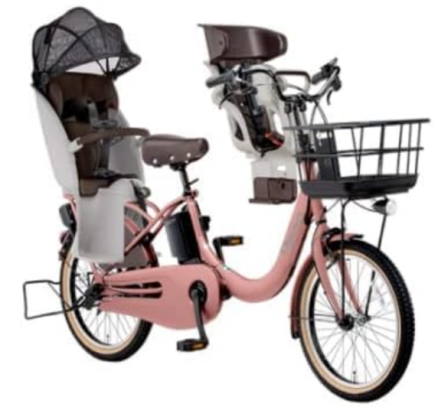
💡 What Is This “Unbelievable” Bicycle?
In Japan, many parents—mostly mothers—use a special electric-assisted bicycle designed to carry up to two children at once. These bicycles are used daily for commuting between home, kindergarten, nursery school, shopping, and more.
Typical features include:
| Feature | Detail |
|---|---|
| Max Passenger Capacity | 1 adult + 2 children |
| Weight of Bicycle | Approx. 35–37 kg |
| With Passengers | Over 100 kg total |
| Speed | Up to 24 km/h with electric assist |
| License Required? | No license needed |
At first glance, they look stylish and convenient—but when you consider the weight and speed, one question arises:
How on earth do you stop a 100 kg+ bicycle with normal brake pads in an emergency?
🚀 Morning Rush = “Baby Missile Time”
If you visit Japan early in the morning, you may witness this.
Mothers in their 30s–40s riding these heavy electric bicycles at high speed, children on board, rushing like missiles to reach kindergarten before the bell rings.
Believe it or not, no special training, license, or test is required to ride this, despite the risk.
Police rarely stop them unless an accident happens.
(To be fair, this is not the only case in Japan where authorities wait until something serious occurs…)
📈 Are the Accidents Increasing?
Unfortunately, yes.
Based on emergency transport data from the Tokyo Fire Department, the number of accidents involving bicycles with child seats has been increasing over the years.
Between 2011 and 2017, there were 1,349 reported cases involving children aged 0–6 years old.
Here is the graph on the data collected by “東京消防庁救急搬送データ (Number of accidents related to the bicycle with infant seats)” in 6 years (2011-2017).
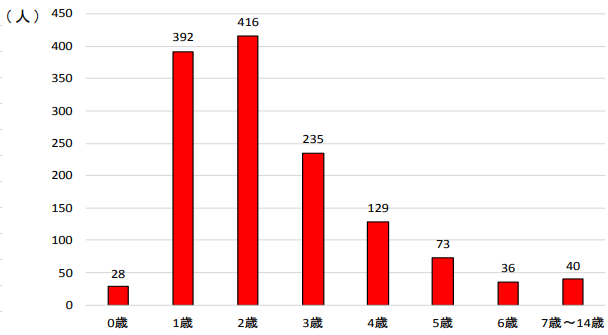
By considering the decreasing population and birth rate in Japan, this problem shall be solved. But the govenment just recommend consumers to choose the “safer” bicycles with “BAA” certificate.
I think this is not just a matter of bicycle itself and its manufacturer, but also the goverment/law and user/consumer.
Japan’s birth rate and population are declining, yet the number of accidents is not decreasing.
🆕 Latest Update (2023–2024 Trends)
Recent government and traffic safety reports show:
✅ More parents now use electric-assisted bicycles due to rising car ownership costs
❗ Accidents involving e-bikes carrying children continue to be reported nationwide
⚠ Major injuries often occur from falls at low speed, not collisions
🔍 Government now recommends buying bicycles with the BAA Safety Certification (Bicycle Association of Japan)
However, this does not fully solve the issue, because:
- Roads are not designed for heavy e-bikes with children
- Parents receive no mandatory safety training
- Enforcement remains minimal
🏁 Who Should Be Responsible?
This is not only about the bicycles or manufacturers.
The core problem is a combination of:
| Stakeholder | Issue |
|---|---|
| Government / Laws | Weak regulations, no training required |
| Manufacturers | Safety improvements are slow and optional |
| Users / Parents | Overconfidence and risky riding behavior |
In short: Everyone holds part of the responsibility.
✅ Final Thoughts
Thank you for reading the first edition of Unbelievable Japan.
If you were surprised to learn that:
- A parent can legally ride a 100 kg+ electric bicycle
- With two children
- At 24 km/h
- Without a license
…then you now understand why this is a uniquely Japanese phenomenon.
Japan is full of surprising systems that work “somehow,” even if they seem unbelievable to outsiders. More episodes are coming soon!

コメント