Japan is known for being clean, safe, and incredibly well-organized—but not everything is as peaceful as it seems. In this series, “Unbelievable Japan,” we uncover surprising and lesser-known sides of Japanese culture and society.
Today’s topic is a phenomenon that shocks many foreign visitors: the so-called “Road Terrorist.”
This refers to Bōsōzoku (暴走族) — Japan’s notorious motorcycle and car gang culture.
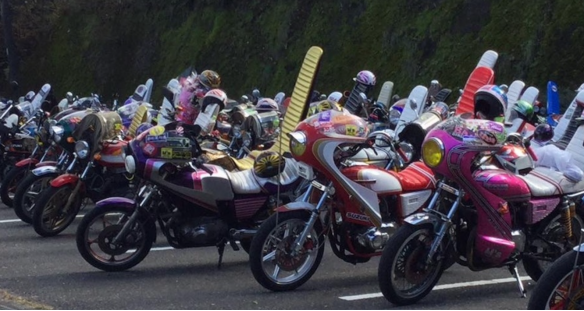

🚨 Who Are the “Road Terrorists” in Japan?
The term Bōsōzoku literally means “reckless driving tribe.”
While often translated as motorcycle gang, this doesn’t fully capture the level of disturbance they cause.
Quick facts:
- Origin: Late 1970s
- Peak popularity: Early 1980s (over 40,000 members across 5,000 groups)
- Vehicles: Illegally modified motorcycles and cars
- Main activity: Riding in large groups at night, breaking traffic laws, and disturbing neighborhoods
Unlike criminal biker gangs overseas, the Japanese version is more focused on public nuisance than direct violence.
🔊 Why Are They Called “Road Terrorists”?
Bōsōzoku disturb communities through noise, traffic disruption, and defiant behavior.
| Behavior | Why It’s a Problem |
|---|---|
| Deafening exhaust and horn noise | Keeps residents awake at night Contributes global warming with unfiltered exhausted gas |
| Extremely slow group driving (≈ 20 km/h) | Creates artificial traffic jams |
| Running red lights & blocking intersections | Dangerous for other drivers |
| Illegal vehicle modifications | Violates Japanese road safety regulations |
They rarely attack civilians physically, but they steal people’s time and peace of mind—especially late at night.

🛑 Why Don’t the Police Simply Arrest Them?
Visitors are often surprised to see Bōsōzoku causing chaos while police “just watch.”
This isn’t due to inaction—there are practical reasons:
- Chasing them can cause accidents, putting the public at risk
- Gathering evidence takes time, and arrests are often made after the act
- Many riders are minors, and laws previously had limited penalties
However, enforcement has improved significantly in recent years.
📍 Latest Trends (2022–2024)
- Increased crackdowns on illegal vehicle modifications
- Police now use facial recognition and social media monitoring to identify riders
- Penalties for minors are being reviewed for further tightening
Historically, some Bōsōzoku groups had links to Yakuza criminal organizations, though this has weakened over time.
🌙 Where and When Can You Encounter Them?
If you’re traveling in Japan, here’s when you’re most likely to spot a Bōsōzoku group:
- Time: Midnight to 3:00 AM
- Days: Fridays, Saturdays, long weekends, New Year’s holiday
- Common areas: Tokyo, Kawasaki, Yokohama, Osaka, Nagoya, Fukuoka
- Typical routes: Coastal highways, expressway entrances, and industrial areas
If you hear sudden loud engine noise echoing through the night—it might not be a movie scene but the real thing.
🎬 Fiction vs. Reality: Are They Dangerous?
Do not imagine “Mad Max” level gangs.
Modern Bōsōzoku are less violent than in the past, but still a public nuisance and a symbol of rebellious youth culture in Japan.
The movement has shrunk, but hasn’t disappeared. In fact, social media has caused a small revival among young riders, who share videos on TikTok, Instagram, and YouTube.
🧭 Final Thoughts: A Unique “Dark Subculture” of Japan
To summarize:
- “Road Terrorist” refers to Japan’s Bōsōzoku motorcycle gangs
- Known for noise, reckless riding, and blocking roads at night
- Numbers are decreasing but the culture still exists today
- If you encounter them: stay clear, don’t provoke, and avoid filming them up close
Japan is a country full of surprises—some beautiful, some… less so.
But understanding them gives you a deeper view of the society beyond the tourist image.
Stay tuned for the next chapter of Unbelievable Japan, where we uncover more unexpected sides of the country!


コメント