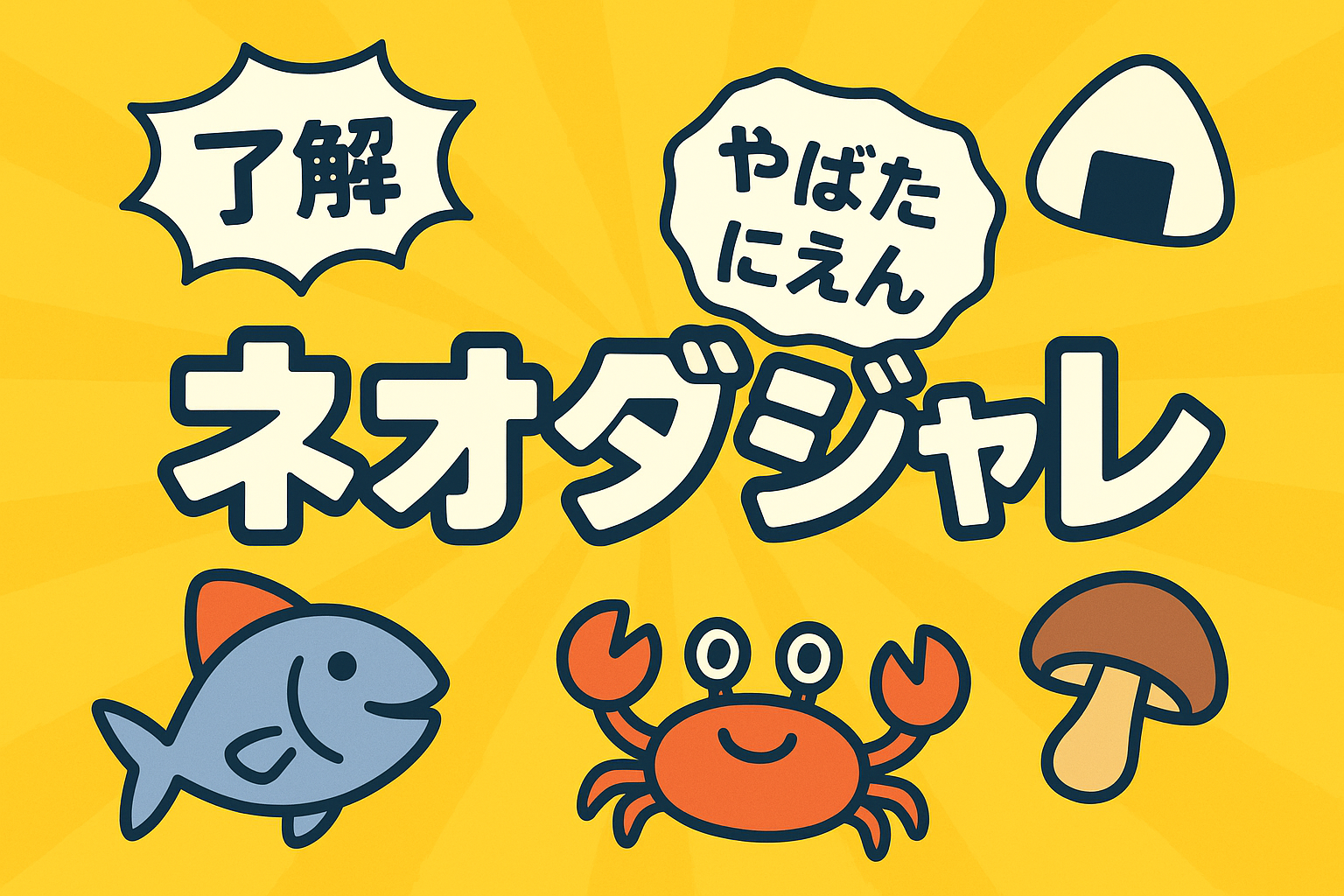
If you think puns are just cheesy jokes told by middle-aged office workers, think again. A new generation of Japanese wordplay, called “Neo-Dajare”, is taking over social media and redefining how humor works in Japan. But what exactly is Neo-Dajare, and why is it suddenly popular among Gen Z?
From “Oyaji Gags” to Neo-Dajare
Traditional Japanese puns, often called “oyaji gags”, have long had a reputation for being awkward or cringe-worthy. Picture a boss proudly announcing, “My skirt button flew off—oh wait, it flew? Haha!” in the middle of lunch. The listener is left in a tricky situation: laugh, or endure the forced humor? These puns, common in the Showa era, were often laughed at reluctantly—or not at all.
Yet, in the Reiwa era, puns are making a comeback, especially among young people. A study by Hakuhodo Institute for Life and Living Research found that the use of puns is most common among people in their 20s (20.6%), while those in their 60s are the least likely to engage (14.8%). Unlike the oyaji gags of old, Neo-Dajare is not about awkward timing—it’s about cleverness, timing, and relatability.

What Makes a Dajare “Neo”?
Neo-Dajare is characterized by playfulness, accessibility, and a hint of intelligence. It often involves cultural references, history, or word transformations that are witty yet easy to understand. Some popular examples among Gen Z include:
- やばたにえん (Yabatanien) – A playful evolution of “ヤバい (Yabai, meaning ‘crazy’ or ‘awesome’)”, combined with corporate-like wordplay.
- 了解道中膝栗毛 (Ryokai Dochuu Hizakurige) – Turning a simple “Understood!” into a pun referencing the classic novel Tōkaidōchū Hizakurige.
- あざ丸水産 (Azamaru Suisan) – A clever blend of “Thank you” and a seafood restaurant chain’s name.
- トイレに行っトイレ (Toire ni Ittoire) – A modern twist on the classic pun style.
- ヤバ杉謙信 (Yabasugi Kenshin) – Combining “Yabai” with the famous samurai Uesugi Kenshin for humorous effect.
Unlike old-fashioned oyaji gags, Neo-Dajare is designed for easy, shareable communication, particularly on social media. It’s witty, quick, and can make a conversation feel fun without forcing laughter.

Timing and Context Are Key
The main difference between old-school puns and Neo-Dajare is TPO—Timing, Place, Occasion. A pun might be technically clever, but if used at the wrong moment, it becomes an annoying oyaji gag. For example, joking about inheritance during a serious discussion would likely irritate the audience. Neo-Dajare, by contrast, thrives when shared in the right context, often digitally or in casual conversation, making it low-risk and widely appreciated.
Why Neo-Dajare is Here to Stay
According to experts like Hidechika Suzuki of the Japan Pun Utilization Association, Japanese humor has always included playful word games. Even though puns were less popular in the 1990s due to the rise of professional comedy, Neo-Dajare shows that wordplay has evolved rather than disappeared. It’s now embraced as a tool for communication, connection, and lightheartedness.
Some of Suzuki’s recent favorites include:
- おシェアになります (Oshare ni Narimasu) – A pun for “Thank you for sharing information.”
- ありがたきシェアわせ (Arigatakisheawase) – A play on gratitude and happiness when someone spreads your message.
Neo-Dajare is not just humor—it’s a social tool, bringing people closer and spreading smiles, one clever word at a time.
Final Thoughts
For those who love wordplay, Neo-Dajare is a refreshing evolution of Japanese puns. It’s smart, shareable, and most importantly, it spreads warmth rather than awkwardness. Whether you’re a Gen Z enthusiast or just someone who appreciates clever humor, Neo-Dajare proves that a well-timed pun can still brighten someone’s day.
So next time you text a friend, why not try a pun like “うれシーサー (Ureshi-sa, a play on ‘I’m happy’)”? You might just start a new wave of smiles.

コメント