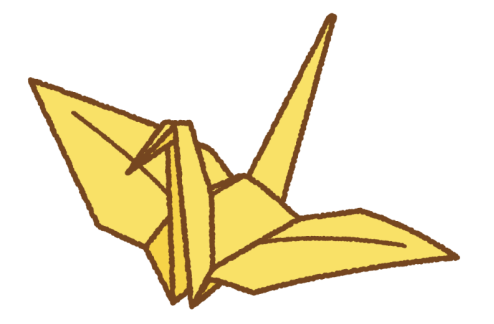
Japan is home to countless cultural treasures, but few are as universally recognized and beloved as origami. This traditional Japanese art of paper folding transforms a simple sheet of paper into intricate and captivating shapes, showcasing the creativity, patience, and precision of its makers. While origami has captured hearts around the world, its roots run deep in Japanese history and culture.
The Historical Origins of Origami
Origami can be traced back to 17th-century Japan, where it was originally called tsutsumi, meaning “to fold” or “to bundle.” In its early days, origami served ceremonial purposes, such as wrapping gifts or offerings at religious events. Because paper was a rare and valuable material, this elegant craft was initially reserved for the upper class.
As Japan entered the Edo period (1603–1868), the art of folding paper began to evolve into a popular form of leisure and entertainment. Cheaper paper became widely available, and instructional books helped ordinary people learn the craft. Iconic traditional models, such as the crane and the samurai helmet, emerged during this period and remain popular to this day.
Symbols and Cultural Significance
Some origami designs carry profound cultural meanings. The crane, or “tsuru,” is perhaps the most famous. In Japanese culture, cranes symbolize peace, longevity, and good fortune. According to legend, folding 1,000 cranes can grant a wish or bring good luck—a tradition closely associated with Sadako Sasaki, a young girl who suffered from the atomic bombing of Hiroshima. Today, the crane remains a symbol of hope and resilience worldwide.
Origami as Artistic Expression
Origami is not limited to traditional figures. Contemporary artists push the boundaries of paper folding, creating intricate animals, abstract sculptures, and even life-sized models. The process combines geometry, precision, and creativity, allowing artists to express themselves while adhering to the discipline of the craft.
A Meditative and Mindful Practice
Beyond artistry, origami is also a calming and meditative activity. The concentration required to fold precise shapes encourages mindfulness, reduces stress, and fosters a sense of achievement. Many practitioners find joy and relaxation in the simple, deliberate act of folding paper.
Origami Goes Global
While deeply rooted in Japanese culture, origami has gained a global following. Schools, art studios, and exhibitions around the world embrace the craft, and artists from diverse backgrounds contribute their own interpretations. Origami has even influenced mathematics, engineering, and design, with foldable structures inspiring innovations in technology and architecture.
Origami in Modern Japanese Society
In contemporary Japan, origami is more than a hobby. Its influence appears in product packaging, interior design, and public art installations. Educational programs often incorporate origami to teach geometry, spatial reasoning, and problem-solving skills, fostering creativity from a young age. Communities and clubs also allow enthusiasts to share knowledge and celebrate the art together.
The Beauty of Simplicity
One of origami’s most remarkable qualities is its simplicity. A single sheet of paper, transformed through a series of deliberate folds, can become a complex and captivating creation. This elegance reflects the Japanese philosophy of finding beauty in minimalism and ingenuity.
Conclusion
Japanese origami is far more than a pastime—it is a living art form with deep cultural roots and universal appeal. From its ceremonial beginnings to its modern artistic expressions, origami embodies tradition, creativity, symbolism, and the joy of making something beautiful from simplicity. Whether in Japan or across the globe, origami continues to inspire, connect, and amaze.


コメント