1. Introduction
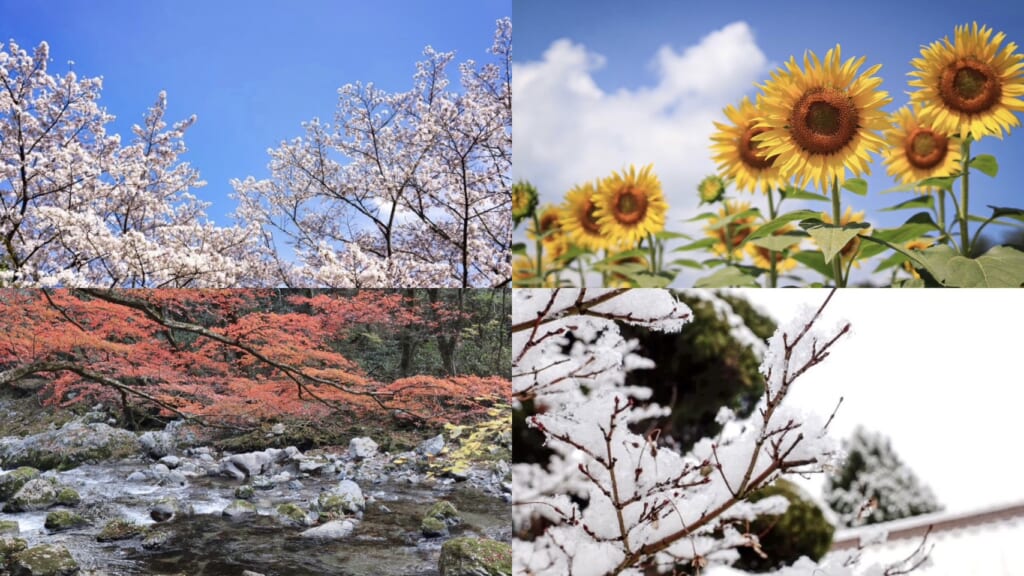
Japan has long been known for its clear four seasons: spring, summer, autumn, and winter. However, due to climate change, summers are becoming longer while spring and autumn are shortening. This shift is causing Japan’s traditional four-season cycle to transition toward a “two-season” pattern.
In this article, we examine how this phenomenon manifests across different regions, from Hokkaido in the north to Kyushu in the south.
2. Hokkaido: Shorter Spring, Extended Summer
- In Hokkaido, spring is shorter, and by late April to early May, summer-like temperatures often appear.
- According to Professor Yoshihiro Tachibana’s research at Mie University, the start of summer has advanced by approximately 10 days, and the end of summer is about 7 days later.
- As a result, traditional spring activities and crop harvests are affected.
Examples of Impact:
- Earlier blooming of cherry blossoms and plum trees
- Shortened harvest periods for spring vegetables such as asparagus and cabbage
3. Kanto & Tokai: Intense Summer, Short Autumn
- In the Kanto and Tokai regions, consecutive days exceeding 30°C are becoming common during summer.
- The long summer shortens the mild autumn season by roughly two weeks.
- Traditional seasonal events such as school sports days and autumn festivals are affected.
Examples of Impact:
- Adjustments in sports day and school festival schedules
- Earlier ripening of autumn fruits like persimmons and grapes

4. Kinki & Kyushu: Seasonal Shifts Most Pronounced
- In the Kinki region, high temperatures often persist after the official start of autumn, making autumn feel very short.
- In Kyushu, winters are short and mild, with spring and autumn existing mainly as transitional periods.
- Extreme weather events such as typhoons and heavy rainfall also affect traditional seasonal activities.
Examples of Impact:
- Adjusting dates for autumn festivals and harvest celebrations
- Shortened cultivation periods for winter vegetables such as cabbage and green onions
5. Cultural and Lifestyle Impacts
- Reduced opportunities to enjoy seasonal experiences such as cherry blossom viewing, autumn foliage, snow viewing, or summer festivals
- Shortened periods for seasonal food availability
- Health risks increase due to heatwaves, temperature swings, and other climate-related stress

6. Coping Strategies for Daily Life
Individual Level:
- Adjust home temperature and clothing to stay comfortable
- Maintain seasonal lifestyle habits, such as gardening, walking, or cooking seasonal dishes
Community & Regional Level:
- Urban heat island mitigation, such as rooftop gardens, street trees, and reflective pavement
- Agriculture: switch to early- or late-maturing varieties and adopt climate-resilient cultivation techniques
7. Conclusion
- Japan’s four-season pattern is shifting toward a two-season pattern across the country.
- Understanding regional differences helps plan daily life, agriculture, and tourism more effectively.
- On a personal level, consciously “experiencing the seasons” remains important to preserve cultural and lifestyle values.

コメント