Meta description:
Why do Japanese people sprinkle English “my” into everyday words — “my car,” “my bag,” even “My Number Card”? This friendly explainer covers the history, cultural reasons, English pitfalls for visitors, and the latest (2025) facts about Japan’s My Number Card system and its uses. Practical tips included.
- Hook — small English word, big cultural effect
- A quick history: when “my” started showing up
- Why Japanese people use “my” before nouns
- The tricky one: “My Number Card” (マイナンバーカード)
- Latest practical facts about the My Number Card (2024–2025)
- Practical tips for foreigners & translators
- Short example — natural phrasing for different audiences
- Closing — why this matters
Hook — small English word, big cultural effect
If you’ve spent time in Japan you’ve probably heard “my” attached to ordinary items: my car, my bag, my cup — and, oddly, My Number Card (マイナンバーカード). It’s short, simple, and ubiquitous. This post explains why that happens, how the pattern developed, what it sounds like to English speakers, and the latest facts about the My Number Card (Japan’s national ID / individual number card) so you can understand both the language quirk and the reality behind the name.
A quick history: when “my” started showing up
After World War II Japan opened rapidly to foreign goods, ideas, and advertising. English loanwords (katakana) became fashionable. One early and visible example is マイカー (“my car”), a term that surfaced as private car ownership spread in the 1950s–1960s. By the mid-1960s “my car” had entered everyday Japanese as an aspirational symbol of personal possession — and the pattern (MY + noun) spread.
Why Japanese people use “my” before nouns
- Loanword prestige & modernity. English phrases often sound modern and stylish in Japanese advertising and speech. “My” communicates personal ownership with a trendy foreign flavor.
- Concise emphasis on possession. Japanese has native ways to show possession, but “my” makes the meaning immediate and emphatic — especially for newly adopted possessions (cars, gadgets, cards).
- Pattern productivity. Once “my” became common with high-status goods (e.g., マイカー), it was easy to apply the pattern to everyday things: マイバッグ (my bag), マイカップ (my cup), etc. The pattern sticks because it’s short, flexible, and understood.
The tricky one: “My Number Card” (マイナンバーカード)
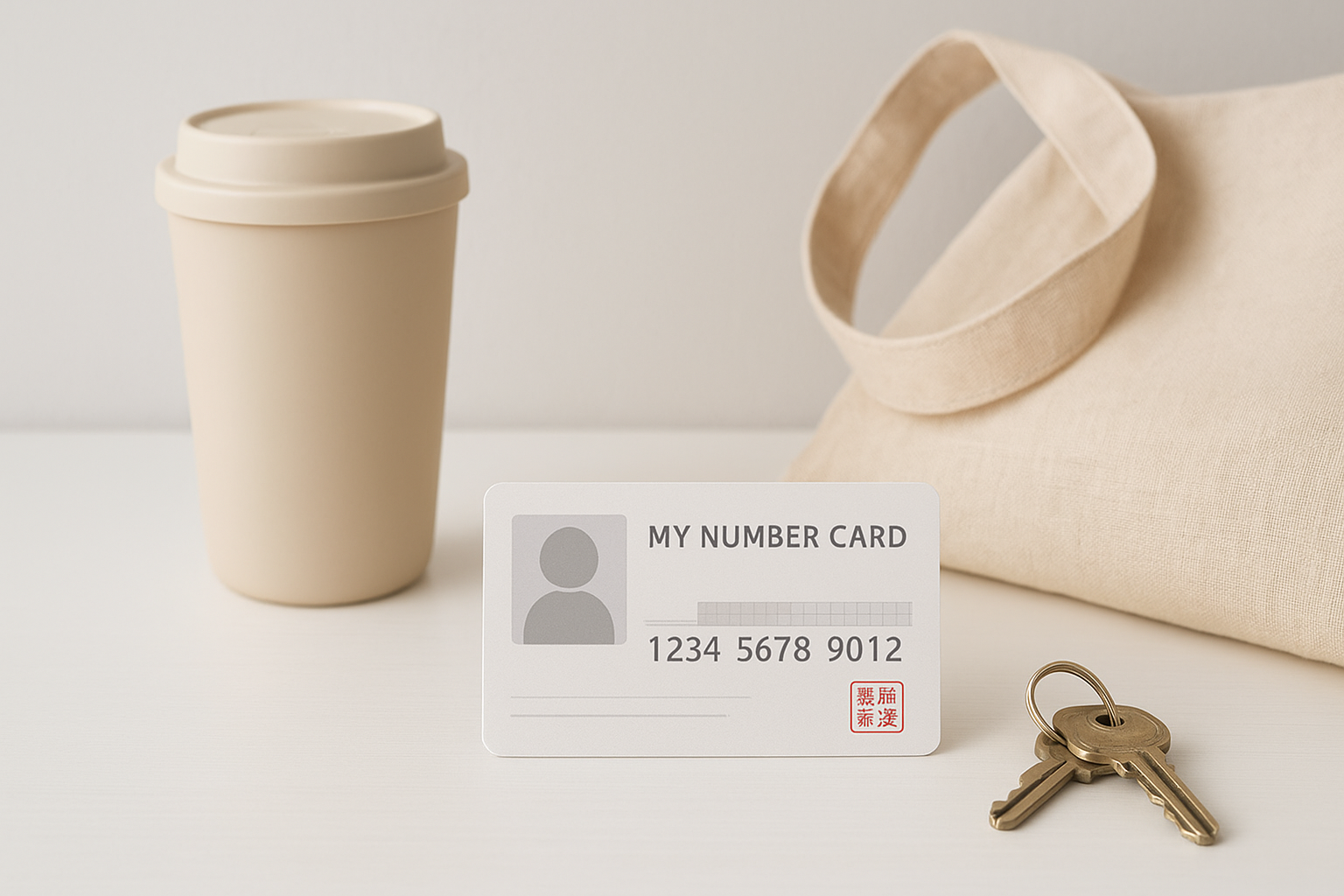
Japan’s official national ID is called マイナンバーカード, literally translated and marketed in English as “My Number Card” (sometimes “Individual Number Card”) — so the word My is actually part of the product name, not a possessive like my cup. That creates funny or awkward lines in English:
- “Please submit your My Number Card.”
- “Here is my My Number Card.”
Both are grammatically correct but can sound odd to native English ears because of the repetition of my. For clarity in English, writers and translators sometimes prefer “the My Number Card”, “your My Number Card”, or use “Individual Number Card” as a more neutral alternative.
Latest practical facts about the My Number Card (2024–2025)
These are important for visitors, residents, and expats:
- Uses expanding: The My Number Card can now be registered for use as a health insurance card at many medical institutions and pharmacies, allowing online verification of insurance eligibility at the reception counter. This registration is increasingly promoted and available.
- Adoption dashboard: The Japanese government publishes an up-to-date dashboard showing application and possession numbers for the My Number Card; the dashboard is updated monthly (latest public updates continue into 2025). If you want exact current adoption percentages, check the government dashboard.
- Technical expiry/renewal issue (2025): A sizable number of cards issued during government incentive campaigns will require updating of the digital signature certificate inside the card (a separate expiry from the physical card). Authorities have warned of mass renewals/updates needed in 2025–2026 for those certificates, so cardholders should be aware of renewal procedures to avoid service interruptions.

Practical tips for foreigners & translators
- When speaking English, avoid the double “my”: say “Here is my Individual Number Card” or “Here is my national ID” instead of “my My Number Card.”
- When writing English for a Japanese audience, either keep the official “My Number Card” (in quotes the first time) or add “(Individual Number Card)” to avoid confusion. Example: Please present your My Number Card (Individual Number Card) at the counter.
- If you’re a resident, consider registering your card for health-insurance use — it can simplify medical visits — but check whether your clinic or pharmacy accepts it first.
Short example — natural phrasing for different audiences
- For a resident (friendly): “Please show your My Number Card (Individual Number Card) or another form of ID.”
- For a native English speaker (plain): “Please show your national ID card” or “Please show your Individual Number Card.”
- For official documents: Keep the official name: My Number Card (マイナンバーカード / Individual Number Card).

Closing — why this matters
That tiny word my reveals a lot: Japan’s long love affair with English loanwords, the rapid adoption of modern possessions in the postwar era, and a naming choice that now affects government ID. Understanding the background helps you avoid awkward English phrasing and use the My Number Card effectively in daily life.


コメント